News
Investment casting is widely used in industrial valve manufacturing because many valve components combine complex internal passages, sealing structures, curved surfaces, variable wall thicknesses, and demanding material requirements. But what types of valves can actually be investment cast?
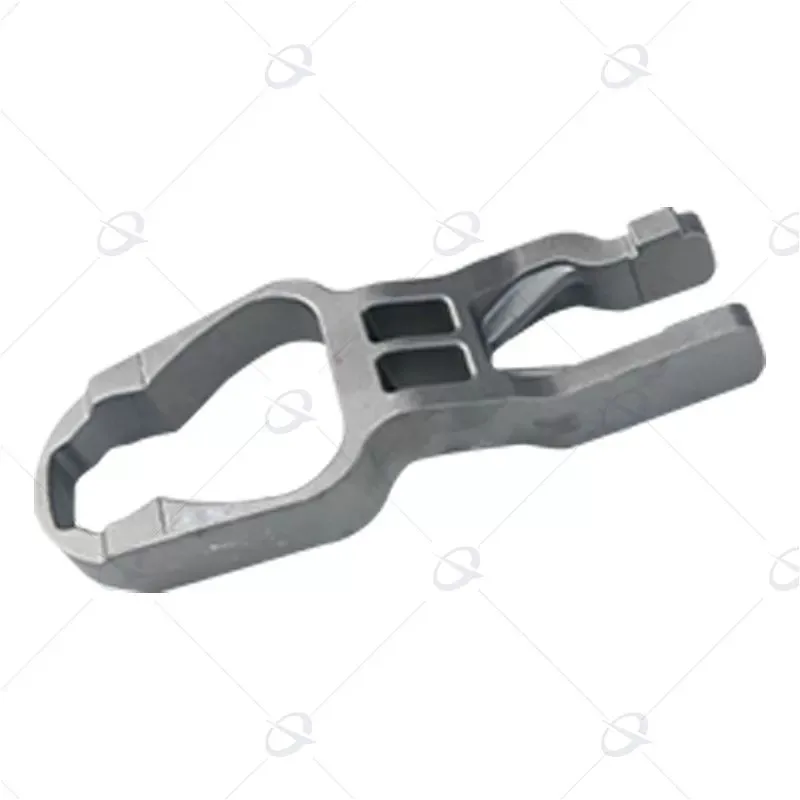
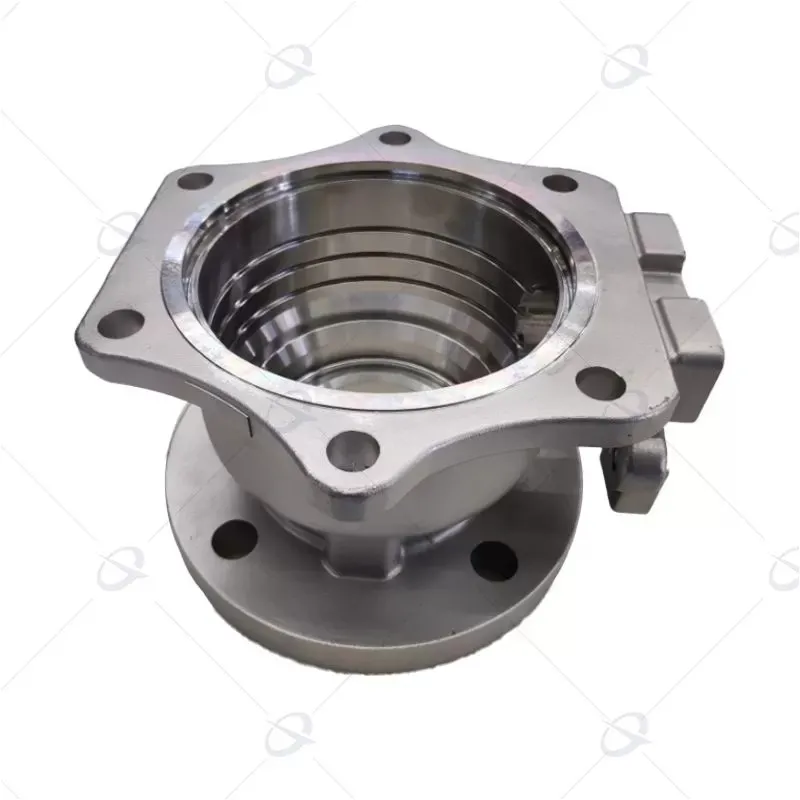
Quick Answer: Ball valves, butterfly valves, gate valves, globe valves, check valves, control valves, pressure-reducing valves, and other specialized industrial valves can all contain components suitable for investment casting. Typical parts include valve bodies, discs, bonnets, flappers, yokes, stems, brackets, levers, and other complex flow-control components.
However, this does not mean every valve component should automatically be investment cast. The right manufacturing process depends on the part size, geometry, material, pressure requirements, dimensional tolerances, machining requirements, production volume, and service environment.
Hebei Grande manufactures customized Pump and Valve Castings for industrial valve and fluid-control equipment manufacturers. Our capabilities combine silica-sol lost wax investment casting, machining, heat treatment, surface treatment, and inspection to support complex valve components produced according to customer drawings and specifications.
Investment casting is especially useful for valve components that are difficult or expensive to manufacture entirely from solid material. The process can reproduce complex external and internal geometries close to the required final shape, after which critical sealing, mounting, and assembly surfaces can be precision machined.
Common valve types that can use investment-cast components include:
Ball valves
Butterfly valves
Gate valves
Globe valves
Check valves
Control valves
Pressure-reducing valves
Safety and relief valve components
Specialized chemical and corrosion-resistant valves
| Valve Type | Typical Investment Cast Components | Why Investment Casting Is Suitable |
|---|---|---|
| Ball Valve | Bodies, bonnets, connectors, stems, levers | Complex cavities and connection features with reduced machining |
| Butterfly Valve | Bodies, discs, brackets, stem-related parts | Suitable for curved disc profiles and integrated structures |
| Gate Valve | Bodies, bonnets, wedges, yokes, stem components | Useful for complex body geometry and corrosion-resistant alloys |
| Globe Valve | Bodies, bonnets, discs, yokes, internal parts | Well suited to curved and complex internal flow passages |
| Check Valve | Bodies, discs, flappers, hinge arms, bonnets | Supports repeatable geometry for moving internal components |
| Control Valve | Bodies, bonnets, cages, yokes, trim-related parts | Useful for complex flow-control geometries and specialty alloys |
Ball valves are widely used in industrial pipelines because they provide relatively simple shutoff control while accommodating different media, pressure levels, and operating environments.
Investment casting can be used to manufacture a range of ball valve components, including:
Ball valve bodies
Body connectors and end pieces
Bonnets
Stem-related components
Mounting brackets
Handles and levers
Other customized structural parts
A ball valve body may contain internal cavities, ports, threaded or flanged connections, mounting features, and changes in wall thickness. Producing the complete component from solid stainless steel or another alloy may require substantial material removal and multiple machining operations.
Investment casting produces the basic body much closer to its final geometry. CNC machining can then concentrate on critical areas such as sealing interfaces, bores, threads, flange faces, and stem connections.
The valve ball itself normally requires accurate machining, grinding, or finishing to achieve the specified sealing geometry and surface condition, even when a cast or near-net-shape blank is used.
Butterfly valves are another important application for precision casting, especially where manufacturers need complex discs or valve bodies made from stainless steel and specialized corrosion-resistant alloys.
Typical investment-cast butterfly valve parts include:
Butterfly valve bodies
Butterfly valve discs
Stem-related components
Mounting brackets
Levers and operating components
The geometry of a butterfly disc affects how fluid passes through the valve. The component may require curved profiles, controlled thickness, shaft connection features, and corrosion-resistant material while remaining relatively lightweight.
Investment casting can reproduce much of this geometry directly. Critical shaft interfaces, sealing areas, and assembly dimensions can then be machined according to the final drawing.
Gate valves are commonly used where a pipeline requires full opening or complete isolation. Depending on the design and size, several gate valve components may be produced through investment casting.
Possible components include:
Gate valve bodies
Bonnets
Wedges and gate-related components
Yokes
Stem-related parts
Operating components
Investment casting becomes particularly attractive when the component combines a complicated shape with corrosion-resistant or high-value material.
For example, a smaller or medium-sized stainless steel gate valve component with multiple integrated features may benefit from near-net-shape investment casting because less material needs to be removed during machining.
For very large and relatively simple gate valve bodies, however, sand casting or another manufacturing process may offer better economics. Therefore, valve size, annual quantity, alloy, machining allowance, and required tolerances should all be evaluated before selecting the casting method.
Globe valves often contain more complex internal flow passages than simple straight-through valve designs. This makes geometry control an important consideration during manufacturing.
Investment-cast globe valve components can include:
Globe valve bodies
Bonnets
Discs
Yokes
Stem-related parts
Internal support components
Investment casting can form curved passages and integrated structural features before final machining. This can reduce the amount of material that must be removed compared with manufacturing a complicated valve body mainly from solid stock.
Critical sealing surfaces and assembly interfaces should still be machined and inspected according to the drawing and valve design requirements.
Check valves prevent reverse flow and usually contain moving internal elements. Depending on valve design, both the body and internal components may be suitable for investment casting.
Common examples include:
Check valve bodies
Discs
Flappers
Hinge arms
Bonnets
Internal supporting components
These components often require a balance of structural strength, controlled geometry, corrosion resistance, and repeatable movement inside the valve.
Investment casting allows complicated shapes to be formed close to the final geometry. Machining can then be limited to sealing interfaces, hinge areas, bores, or other specified functional surfaces.
Unlike a simple on-off valve, a control valve regulates flow, pressure, temperature, or other process conditions. This often results in more complicated internal flow-control structures.
Potential investment-cast components include:
Control valve bodies
Bonnets
Cages
Yokes
Trim-related components
Actuator connection components
Investment casting can be especially useful when the valve design requires complex geometry together with stainless steel, nickel-based alloys, or other materials that are relatively expensive or difficult to machine extensively.
Investment casting is not limited to the most common valve designs. Pressure-reducing valves, safety valve components, corrosion-resistant chemical valves, and other specialized flow-control equipment may also use precision-cast parts.
Hebei Grande has experience producing customized valve bodies, valve covers, flange valve bodies, and other precision components according to customer drawings.
For specialized valves, the engineering evaluation should focus less on the valve name and more on the actual component geometry, alloy, operating conditions, machining requirements, and inspection criteria.
In many projects, the strongest case for investment casting is not necessarily the complete valve but the individual components with complicated geometries or expensive materials.
| Valve Component | Typical Manufacturing Requirement | Investment Casting Benefit |
|---|---|---|
| Valve Body | Internal cavities, ports, flanges, bosses | Forms integrated near-net-shape geometry |
| Butterfly Disc | Curved profile and shaft interface | Reduces machining of complex profiles |
| Check Valve Flapper | Controlled shape and repeatable movement | Consistent geometry for batch production |
| Bonnet | Mounting, pressure boundary, connection features | Integrates multiple structural features |
| Yoke / Bracket | Irregular external geometry | Near-net-shape production reduces machining |
| Stem-Related Parts | Precision connection and alloy requirements | Suitable for specialized component designs |
The valve type alone does not determine the correct casting material. Material selection should be based on the actual fluid medium, temperature, pressure, corrosion mechanism, abrasion, mechanical loading, and applicable industry specification.
Hebei Grande supports stainless steel materials such as:
304L
316L
CF8
CF8M
CrMnMo and other specified grades
Stainless steels are commonly considered for water treatment, chemical processing, marine equipment, process machinery, and other environments requiring corrosion resistance and reliable mechanical properties.
More aggressive operating environments may require high-performance alloys such as:
Inconel 625
HC276
HC22
2.4605
K-series nickel-based alloys
These alloys can be considered for applications involving corrosive chemicals, chloride exposure, high temperatures, or other severe-service conditions.
For components exposed to wear, elevated temperature, or demanding mechanical conditions, Hebei Grande can also work with cobalt-based alloys such as STL6, STL31, and S816 according to project requirements.
Stainless steel is widely used for valve components, but machining complicated valve geometries entirely from solid stainless steel can create substantial material waste and long machining cycles.
Investment casting first produces a near-net-shape component. CNC machining is then concentrated on surfaces where final dimensional accuracy is actually required, such as:
Sealing faces
Flange surfaces
Threads
Bores
Stem interfaces
Mounting holes
Assembly datums
This manufacturing route can be particularly useful for stainless steel valve bodies, butterfly discs, check valve components, bonnets, and other components with complicated structural features.
Machining directly from solid material remains practical for simple shapes, prototypes, and components where extremely tight tolerances dominate the entire geometry.
The economics can change when the valve component contains multiple ports, internal cavities, curved passages, bosses, ribs, flange structures, and large differences in wall thickness.
In these situations, investment casting can create the main geometry first and leave only functional areas for final machining.
| Factor | Investment Casting | Machining from Solid |
|---|---|---|
| Complex Geometry | Can form complex near-net shapes | May require multiple setups and extensive cutting |
| Material Removal | Generally reduced | Can be substantial for irregular parts |
| Tooling | Requires casting tooling and process development | May require less dedicated forming tooling |
| Final Precision | Critical features normally machined afterward | High precision can be produced directly |
Both investment casting and sand casting are widely used in valve manufacturing, but they are better suited to different component requirements.
Investment casting is generally worth evaluating when the valve component requires:
Complex geometry
Better as-cast surface quality
Lower machining allowance
Relatively detailed external or internal features
Stainless steel or specialized high-value alloys
Consistent repeat production
Sand casting may be more economical for very large valve bodies, simpler geometries, or projects where relatively extensive machining is already expected.
Neither process is automatically better. The correct decision should be made from the actual component drawing and production requirements.
Investment casting is flexible, but selecting it for every valve component can increase manufacturing cost unnecessarily.
Another process may be more appropriate when:
The valve body is extremely large and heavy.
The geometry is simple and easily produced by another casting method.
The required production quantity does not justify tooling development.
The component will require extensive machining regardless of the casting process.
The specified material or mechanical requirements favor forging or another manufacturing method.
The applicable pressure or industry specification limits the acceptable manufacturing route.
Practical Point: The question should not only be “Can this valve be investment cast?” A better question is “Does investment casting provide the right combination of geometry, material utilization, machining reduction, quality consistency, and production cost for this specific component?”
Before developing tooling, valve manufacturers should evaluate several important factors.
Parts with curved passages, internal cavities, ribs, bosses, integrated mounting features, and irregular external profiles generally provide more opportunity for near-net-shape casting than simple blocks or rings.
Not every surface requires the same tolerance. Separate sealing faces, bores, threads, flange surfaces, and assembly datums from non-critical as-cast surfaces. This helps determine the correct machining allowance.
Provide the required alloy together with information about the working medium, temperature, corrosion conditions, and wear environment where possible.
Investment casting requires tooling and process development. Repeat production can make this investment more economical, particularly for complicated components that would otherwise require significant machining.
Dimensional inspection, material verification, mechanical testing, metallographic examination, hardness testing, and non-destructive testing should be discussed during quotation rather than after the first production batch.
Manufacturing a reliable valve component involves more than producing an acceptable casting surface. The casting design, alloy, heat treatment, machining strategy, dimensional inspection, and final application should be considered as one manufacturing system.
A typical project workflow may include:
Drawing and specification review – evaluate geometry, alloy, tolerances, machining areas, and inspection requirements.
Process design and casting simulation – determine an appropriate casting route before tooling and production.
Wax pattern production – reproduce the required component geometry.
Ceramic shell making – build the shell used for precision casting.
Investment or vacuum casting – pour the specified alloy according to the developed process.
Casting after-treatment – remove gates and complete necessary cleaning and finishing operations.
Heat and surface treatment – apply according to material and application requirements.
CNC machining – machine sealing surfaces, bores, flanges, threads, and other critical dimensions.
Inspection – verify material, dimensions, and other specified quality characteristics.
Choosing a valve casting supplier involves more than comparing the unit price of an unfinished casting. Valve manufacturers also need to consider engineering communication, material capability, machining coordination, batch consistency, inspection, and long-term supply stability.
Hebei Grande Precision Machinery Co., Ltd. was established in 2005. Our manufacturing experience covers precision castings and machined components for demanding industrial applications, including pump and valve systems.
For valve projects, this experience allows us to evaluate not only whether a component can be cast, but also how casting geometry, machining allowance, alloy selection, and inspection requirements should work together.
Hebei Grande uses silica-sol lost wax casting technology for precision components. The process is suitable for valve parts containing complex curves, internal passages, ribs, bosses, flanges, and variable wall sections.
For appropriate components, producing these features close to the final shape can reduce unnecessary material removal during subsequent machining.
A precision valve casting is rarely complete immediately after casting. Sealing surfaces, bores, threads, flange faces, stem interfaces, and assembly surfaces often require CNC machining.
Hebei Grande combines casting production with high-precision CNC machine tools and machining centers, allowing customers to coordinate the casting blank and final machining requirements through one manufacturing partner.
Different valves may operate in water, seawater, chemicals, slurry, high-temperature fluids, or other challenging media. Hebei Grande supports stainless steels, nickel-based alloys, cobalt-based alloys, and other specified materials for customized casting projects.
Our material portfolio includes grades such as 304L, 316L, CF8, CF8M, Inconel 625, HC276, HC22, STL6, STL31, and other alloy systems according to customer requirements.
In addition to casting and machining, Hebei Grande can provide heat treatment, surface treatment, and inspection services.
Inspection equipment includes spectrometers, metallographic microscopes, hardness testers, universal material testing machines, coordinate measuring equipment, and X-ray non-destructive testing equipment.
This integrated approach helps customers manage material conformity, dimensions, internal casting quality, and finished component requirements within a more coordinated manufacturing process.
Valve manufacturers often purchase multiple product models rather than one standardized casting. Hebei Grande's production system is designed to support different materials, product structures, and production quantities, including customized and repeat OEM projects.
With an annual precision casting output of approximately 2,400 tons, we can support both new product development and long-term industrial supply programs.
Stable repeat production requires more than producing one acceptable sample. Hebei Grande applies digital production management and traceability systems to improve process control across different production stages.
This is particularly valuable for valve manufacturers managing multiple casting models, repeat orders, and long-term supplier qualification programs.
If you are considering converting an existing valve component to investment casting or developing a new design, providing complete project information can significantly improve the accuracy of the manufacturing evaluation and quotation.
Recommended information includes:
2D engineering drawings
3D CAD models if available
Required alloy or material standard
Estimated annual quantity
Critical dimensions and tolerances
Machining requirements
Heat-treatment requirements
Surface-treatment requirements
Operating medium and service conditions
Pressure and temperature requirements where applicable
Required inspection and testing
Applicable ASTM, DIN, JIS, BS, GB, or other standards
Ball valves, butterfly valves, gate valves, globe valves, check valves, control valves, pressure-reducing valves, and many specialized industrial valves can use investment-cast components.
The parts most likely to benefit are those with complex geometry, integrated features, expensive corrosion-resistant alloys, or significant machining requirements. Valve bodies, discs, flappers, bonnets, yokes, brackets, stem-related components, and other flow-control parts are all common candidates.
The final decision should still be made component by component. Size, alloy, pressure requirements, tolerance, annual quantity, machining allowance, and service conditions determine whether investment casting is technically and economically appropriate.
Hebei Grande provides customized precision casting and machining services for industrial valve manufacturers and fluid-control equipment suppliers. Send us your drawings, material requirements, estimated quantity, machining specifications, and inspection requirements for project evaluation.
Yes. Many small and medium-sized valve bodies with complex cavities, ports, flanges, and mounting features can be produced through investment casting. However, very large or geometrically simple valve bodies may be more economical to manufacture through sand casting or another process.
Components with complex geometry or substantial machining requirements usually provide the strongest opportunities. Examples include valve bodies, butterfly discs, check valve flappers, bonnets, yokes, brackets, levers, and specialized internal components.
Yes. Stainless steels such as 304L, 316L, CF8, and CF8M can be used for appropriate investment-cast valve components. The correct grade should be selected according to the medium, corrosion conditions, temperature, pressure, and applicable specification.