News
Medical Component Investment Castings
Investment Casting for Medical Implants
Materials Used for Medical Investment Castings
Investment Casting for Surgical Instruments
Investment Casting for Dental Instruments
Advantages of Investment Casting for the Medical Industry
Medical Investment Casting Manufacturing Capabilities
Frequently Asked Questions
The medical industry requires metal components with high dimensional accuracy, reliable mechanical performance and consistent surface quality. From surgical instruments and dental tools to orthopedic components and diagnostic equipment parts, manufacturers must carefully control material selection, component geometry and production quality.
Investment casting, also known as lost-wax casting, is a precision manufacturing process suitable for producing complex metal parts with tight tolerances and smooth surfaces. It can create near-net-shape components, reduce material waste and minimize the need for extensive secondary machining.
For medical equipment manufacturers, investment casting provides a scalable solution for prototypes, small production runs and repeat bulk orders.
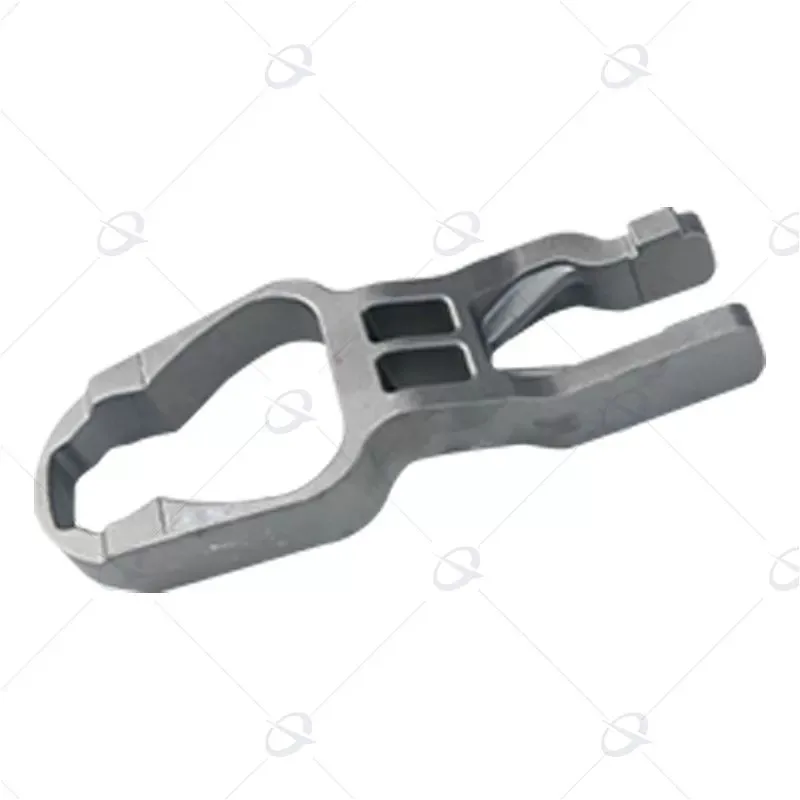
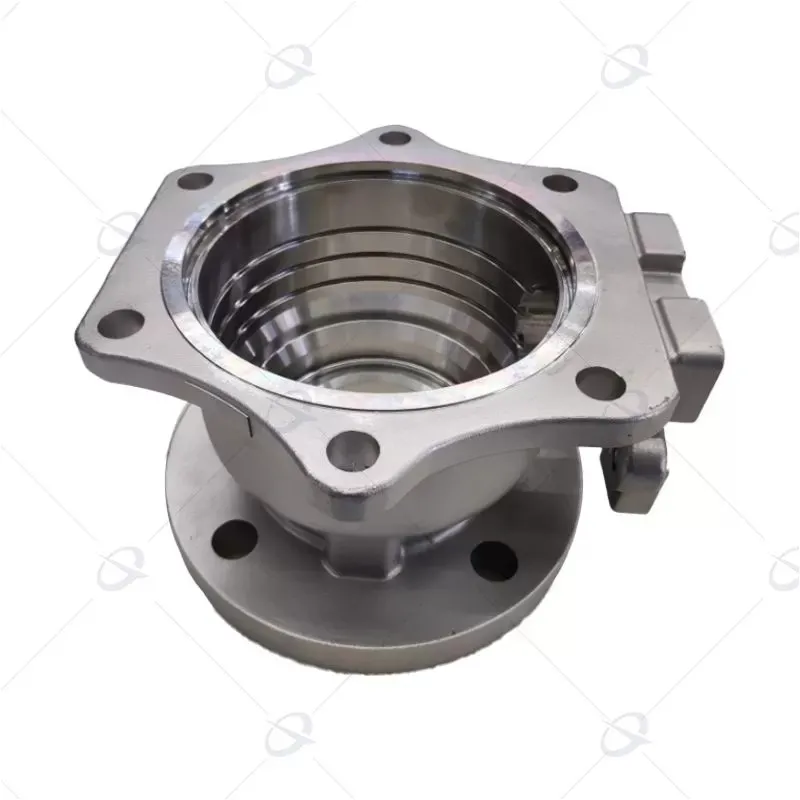
Medical component investment casting is used to manufacture metal parts with complex shapes, thin walls, curved surfaces and integrated structural features.
Compared with conventional machining, investment casting can form much of the component geometry during the casting process. This helps reduce machining time, simplify component assembly and improve material utilization.
Typical medical investment castings include:
Surgical instrument components
Orthopedic instrument parts
Dental instrument components
Diagnostic equipment components
Medical equipment housings
Stainless steel handles and brackets
Fixation and support components
Prosthetic equipment parts
Medical device connectors
Rehabilitation equipment components
The process is particularly useful when a component contains irregular profiles, detailed contours or complex features that would be expensive to machine from solid metal.
However, medical parts must be evaluated according to their specific application. Components used in general medical equipment, surgical instruments and implantable devices may have significantly different material, testing, traceability and certification requirements.
Medical implants are devices or components placed inside or on the human body. They may be used to replace damaged structures, support tissue, restore joint function or assist with medical treatment.
Implant-related components often require:
High dimensional consistency
Smooth and controllable surfaces
Reliable mechanical strength
Good corrosion resistance
Excellent wear resistance
Verified material composition
Controlled internal integrity
Precise mating surfaces
Reliable batch traceability
Investment casting can produce implant-related components with complex anatomical shapes and near-net-shape geometry. It is suitable for components with curved surfaces, integrated connection features and irregular structures.
Typical investment-cast implant-related components may include:
Femoral component blanks
Tibial tray components
Hip prosthesis components
Shoulder joint components
Elbow joint components
Wrist joint components
Orthopedic fixation components
Dental implant-related components
Prosthetic support structures
Critical functional areas usually require CNC machining after casting. Grinding, polishing, passivation, electropolishing and other finishing processes may also be required depending on the component specification.
The casting process alone does not make a component suitable for implantation. Medical implant components must also comply with applicable material standards, manufacturing validation requirements, quality management systems and regulatory requirements.

Material selection is one of the most important factors in medical investment casting. The chosen alloy must meet the mechanical, chemical and surface requirements of the final component.
Common materials include stainless steel, titanium alloys and cobalt-chromium alloys.
Stainless steel is widely used for surgical instruments, dental tools, orthopedic instruments and medical equipment components.
Its main advantages include:
Good corrosion resistance
High mechanical strength
Good machinability
Compatibility with polishing
Compatibility with passivation
Stable performance in repeat production
Cost-effective manufacturing
Common stainless steel grades may include:
400-series stainless steel
17-4PH stainless steel
15-5PH stainless steel
Austenitic stainless steel grades
Martensitic stainless steel grades
The correct stainless steel grade should be selected according to the required hardness, corrosion resistance, heat-treatment condition and intended use.
Titanium alloys are valued for their high strength-to-weight ratio, low density and excellent corrosion resistance.
Certain titanium grades are used in orthopedic, dental and implant-related applications because of their mechanical properties and compatibility with demanding medical environments.
Titanium investment casting requires specialized melting and pouring controls because molten titanium is highly reactive.
Cobalt-chromium alloys provide high hardness, wear resistance, mechanical strength and corrosion resistance.
These materials may be used for components exposed to repeated loading and friction, including certain orthopedic and joint-related parts.
Because cobalt-chromium alloys can be difficult to machine, investment casting is useful for forming complex initial geometries before finishing critical surfaces.
Investment casting can produce orthopedic components with complex anatomical shapes and integrated structural features.
Examples include:
Knee component blanks
Tibial tray components
Hip joint components
Shoulder instrument components
Bone fixation instrument parts
Trial instrument components
Sizing instrument parts
Orthopedic tool handles
Knee-related components often require curved profiles, accurate alignment and good wear resistance.
Cobalt-chromium alloys may be considered for components requiring high hardness and wear resistance. Titanium alloys may be selected when reduced weight and corrosion resistance are important.
After investment casting, functional surfaces may require CNC machining, grinding and polishing to meet the final dimensional and surface requirements.
Tibial tray components must provide reliable structural support under repeated loading.
Investment casting can create the complex initial shape, while CNC machining can be used to finish connection surfaces, holes and critical dimensions.
Elbow, shoulder and wrist components often have compact and irregular geometries.
Investment casting can form these complex profiles while maintaining sufficient machining allowance for final precision finishing.
Depending on the application, stainless steel, titanium alloys or cobalt-chromium alloys may be selected.
Investment casting is widely used to manufacture surgical instrument components with complex shapes, ergonomic designs and integrated functional features.
Typical products include:
Forceps
Scissors
Retractors
Needle holders
Surgical clamps
Graspers
Instrument handles
Orthopedic surgical tools
Endoscopic instrument parts
Specialized operating-room tools
One advantage of investment casting is the ability to combine multiple design features into a single metal component. This can reduce welding, mechanical assembly and the number of individual parts.
The manufacturing process begins with an evaluation of the technical drawing, material grade, dimensional tolerances, surface requirements and estimated order quantity.
A design-for-manufacturing review may consider:
Wall thickness
Fillet radius
Draft requirements
Machining allowances
Shrinkage compensation
Gate and runner design
Potential deformation
Areas requiring finishing
A metal mold is manufactured according to the approved component design.
Wax is injected into the tooling to create an accurate pattern of the final component. For prototype development, 3D-printed patterns may also be considered.
Multiple wax patterns are attached to a central runner system to form a wax assembly.
The arrangement must support efficient metal flow and controlled solidification.
The wax assembly is repeatedly dipped into ceramic slurry and coated with refractory material.
Multiple layers are applied until a strong ceramic shell is formed around the wax patterns.
The ceramic shell is heated, causing the wax to melt and drain away.
This leaves an internal cavity in the exact shape of the desired medical component.
Molten metal is poured into the preheated ceramic shell under controlled conditions.
The pouring temperature, mold temperature and solidification process must be carefully controlled to reduce casting defects.
After the metal has solidified, the ceramic shell is removed.
The individual castings are separated from the runner system, and excess material is trimmed away.
Depending on the component requirements, secondary operations may include:
CNC machining
Drilling
Tapping
Reaming
Grinding
Heat treatment
Straightening
Mechanical polishing
Hand polishing
Passivation
Pickling
Electropolishing
Bead blasting
Finished components may be inspected through:
Dimensional inspection
Visual inspection
Surface roughness measurement
Material composition analysis
Hardness testing
Tensile testing
Dye penetrant testing
Radiographic testing
Coordinate measuring machine inspection
Investment casting is also suitable for manufacturing dental instruments and dental equipment components.
Dental tools often include narrow sections, curved working ends, detailed grips and irregular geometries. These features can be difficult and expensive to produce entirely through machining.
Typical investment-cast dental products include:
Dental forceps
Periodontal probes
Root elevators
Dental scalers
Dental mirror handles
Extraction instrument components
Endodontic instrument parts
Dental clamps
Orthodontic instrument components
Dental implant-related components
Investment casting can form the basic geometry of the dental tool before CNC machining, grinding and polishing.
For components with critical connection surfaces, threads or precise mating features, secondary machining is normally required.
Investment casting can produce complex shapes that may be difficult to manufacture through conventional machining or other metal-forming methods.
It is suitable for components with:
Curved surfaces
Irregular profiles
Thin walls
Integrated structural features
Small holes
Detailed contours
Internal passages
Identification marks
Investment casting provides good dimensional consistency for repeat production.
Achievable tolerances depend on the component size, material, geometry and casting structure. Critical dimensions can be finished through CNC machining.
The ceramic shell reproduces the wax pattern in detail, resulting in a smoother as-cast surface than many conventional casting methods.
This can reduce the amount of grinding, polishing and machining required.
Medical components may still require additional finishing to meet the specified surface roughness or cleanliness requirements.
Investment casting produces components close to their final shape.
This can reduce:
Raw material consumption
Machining time
Cutting tool wear
Metal waste
Production labor
Total manufacturing cost
The process can produce relatively thin-wall components, provided that the design supports proper metal flow and solidification.
The minimum practical wall thickness should be confirmed during the manufacturability review.
Investment casting supports a broad range of alloys, including:
Stainless steel
Carbon steel
Tool steel
Heat-resistant steel
Nickel-based alloys
Cobalt-based alloys
Titanium alloys
Aluminum alloys
Brass
Bronze
Actual material availability depends on the casting facility and its melting capabilities.
Components that would otherwise require welding or mechanical assembly may be redesigned as a single investment casting.
This can reduce:
Component quantity
Welding operations
Assembly labor
Alignment problems
Supply-chain complexity
Potential failure points
Investment casting is suitable for prototype development, small-batch production and repeat bulk orders.
Once the tooling and casting process have been validated, the same production method can be used for consistent batch manufacturing.
Rapid pattern production and near-net-shape manufacturing can help shorten the development cycle for new medical components.
Actual lead time depends on tooling complexity, material availability, sample approval, machining, testing and surface finishing requirements.
Medical device manufacturers should evaluate more than basic casting capacity when selecting an investment casting supplier.
A capable supplier should provide engineering support, tooling, casting, machining, finishing and quality inspection.
Available materials may include:
400-series stainless steel
17-4PH stainless steel
15-5PH stainless steel
Austenitic stainless steel
Martensitic stainless steel
Carbon steel
Aluminum alloys
Brass
Bronze
Other custom alloys
The final material should be selected according to the technical drawing and applicable material standard.
Typical manufacturing capabilities include:
Custom tooling development
Wax pattern production
Ceramic shell manufacturing
Controlled melting and pouring
Prototype casting
Sample development
Small-batch manufacturing
Medium-volume manufacturing
High-volume repeat production
Medical components often require precision machining after casting.
Common machining operations include:
CNC milling
CNC turning
Drilling
Tapping
Reaming
Precision boring
Thread machining
Surface grinding
Available surface finishing processes may include:
Mechanical polishing
Hand polishing
Passivation
Pickling
Electropolishing
Phosphate coating
Bead blasting
Heat treatment
Surface grinding
The appropriate surface treatment depends on the material, final application and required surface condition.
A medical investment casting quality-control process may include:
Raw material inspection
Material certificate verification
Chemical composition analysis
Wax pattern inspection
Process parameter monitoring
Dimensional inspection
Visual inspection
Surface roughness testing
Hardness testing
Tensile testing
Dye penetrant testing
Radiographic testing
Coordinate measuring machine inspection
Batch traceability
ISO 9001 demonstrates that a manufacturer operates a documented quality management system.
For medical applications, additional quality systems, customer approvals and medical-specific certifications may be required according to the component classification and target market.
Investment casting lead time is affected by:
Tooling complexity
Component size
Alloy type
Sample quantity
Machining requirements
Heat treatment
Surface finishing
Inspection procedures
Order quantity
A reliable supplier should provide a clear schedule for tooling, sample production, approval, batch manufacturing, inspection and shipment.
Investment casting, also known as lost-wax casting, is a precision metal manufacturing process.
A wax pattern is coated with ceramic material to create a mold. After the wax is removed, molten metal is poured into the ceramic cavity to form the component.
The process is known for producing complex geometries, smooth surfaces and near-net-shape metal parts.
Investment casting can produce complex medical components with integrated structures, good dimensional consistency and relatively smooth surfaces.
It can also reduce machining, welding and assembly requirements.
Investment casting may be used for certain implant-related components, depending on the material, design, manufacturing controls and applicable regulations.
The casting process alone does not make a part suitable for implantation. Material validation, process qualification, surface treatment, testing, cleanliness and traceability must also be considered.
Common materials include stainless steel, titanium alloys and cobalt-chromium alloys.
The correct material depends on the required strength, corrosion resistance, wear resistance, weight and intended application.
Investment casting provides good dimensional repeatability, but achievable tolerances depend on the component size, alloy, wall thickness and geometry.
Critical dimensions are normally completed through CNC machining.
The fine ceramic shell accurately reproduces the surface of the wax pattern.
This produces a smoother as-cast surface than many sand-casting methods and reduces the need for extensive machining.
Additional polishing, passivation or electropolishing may still be required.
Yes. Investment casting can produce thin-wall components when the part design supports proper metal flow and controlled solidification.
The required wall thickness should be reviewed before tooling development.
Investment casting can reduce total production costs by minimizing machining, material waste, welding and assembly.
It is especially cost-effective for complex components that would otherwise require multiple machining operations.
Buyers should provide:
2D technical drawings
3D CAD files
Material grade
Dimensional tolerances
Surface requirements
Heat-treatment requirements
Testing requirements
Estimated order quantity
Annual purchasing volume
Intended application
Complete technical information allows the manufacturer to evaluate tooling cost, manufacturability, production time and unit pricing.
Lead time varies according to the component design, tooling complexity, material, order quantity and secondary processing requirements.
A typical project includes:
Drawing review
Manufacturability analysis
Tooling production
Sample casting
CNC machining
Surface finishing
Inspection
Sample approval
Batch production
Projects requiring additional medical validation, testing or documentation may require a longer development cycle.