News
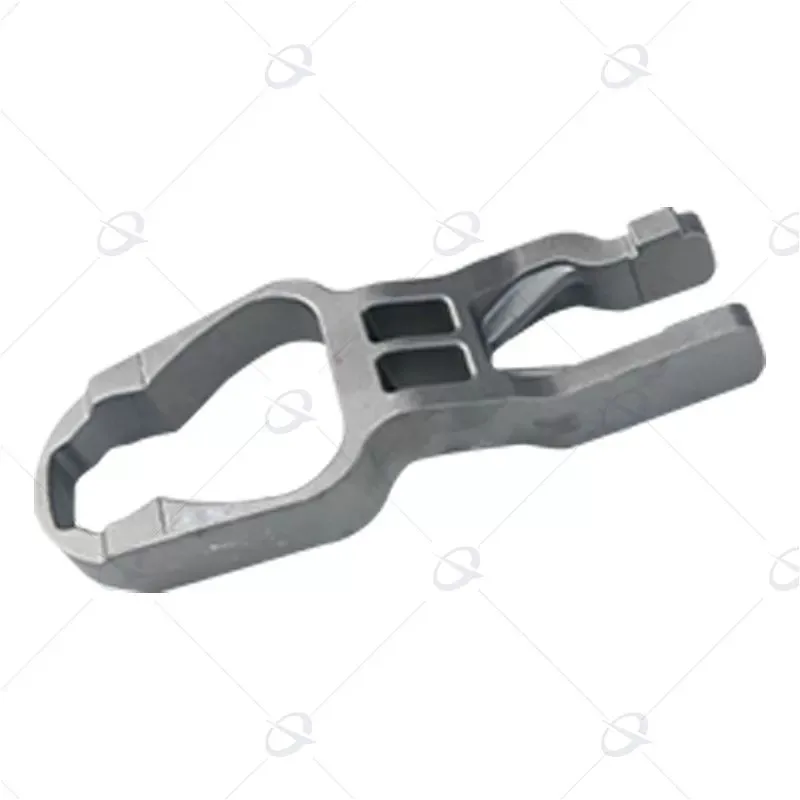
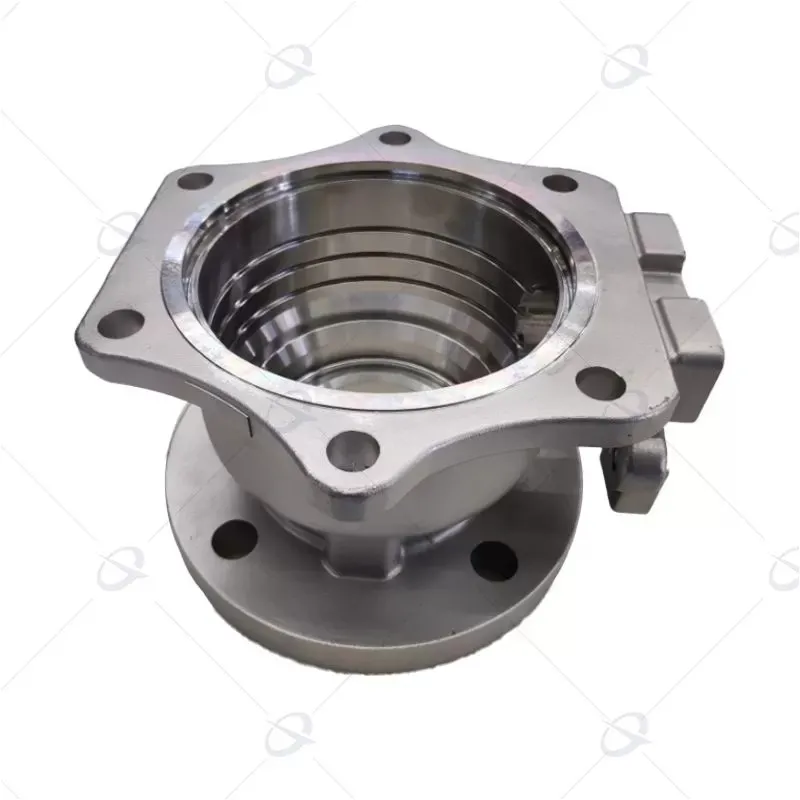
When industrial valve buyers need customized flow control components with complicated internal passages, high pressure resistance, and stable long-term performance, traditional machining or fabrication often creates limitations. Investment casting for complex industrial valve designs provides a solution by producing near-net-shape valve bodies with intricate geometries, reduced machining requirements, and improved material utilization. For industries such as oil & gas, chemical processing, power generation, and water treatment, Pump and Valve Castings manufactured through precision investment casting help engineers achieve designs that were previously difficult or expensive to manufacture.
The key challenge for many procurement teams is not simply finding a valve supplier, but finding a manufacturing partner capable of producing custom investment cast valve components while maintaining dimensional accuracy, pressure integrity, and repeatable quality. Through advanced wax pattern production, ceramic shell molding, and CNC finishing, Hebei Grande Precision Machinery Co., Ltd. supports global customers requiring high-performance valve castings for demanding industrial environments.
Industrial valves are becoming increasingly complex because modern systems require better flow control, smaller installation space, and higher operating efficiency. A standard valve body may only need basic passages, but many industrial applications require multi-channel structures, curved flow paths, thin walls, and integrated connection designs.
For example, chemical processing plants often require valves that can handle corrosive fluids under continuous operation. A conventional welded valve body may introduce additional joints and potential leakage points. Investment casting solves this problem by creating a single-piece metal structure with complex internal cavities.
Investment casting, also known as lost-wax casting, uses a wax pattern covered with ceramic layers to create a precise mold. After wax removal, molten metal fills the cavity and forms the final component. According to industry references, investment casting is widely used when manufacturers require complex shapes, tight tolerances, and reduced machining compared with traditional manufacturing routes. :contentReference[oaicite:0]{index=0}
For valve manufacturers, this process provides several measurable advantages:
Wall thickness control: suitable for lightweight valve structures without sacrificing pressure capability.
Complex geometry production: enables internal passages and external shapes that are difficult to machine.
Reduced machining allowance: decreases material waste compared with manufacturing from solid blocks.
Improved design flexibility: supports customized valve configurations for different industries.
The first step begins with engineering analysis. Designers evaluate pressure requirements, flow direction, temperature range, and material compatibility before creating the valve structure.
For complex valves, engineers typically analyze:
Fluid flow channels and turbulence risks
Pressure-bearing areas
Wall thickness distribution
Connection dimensions
Material performance under operating conditions
Hebei Grande Precision Machinery Co., Ltd. works with customers during the design stage to optimize casting feasibility, helping prevent issues such as uneven shrinkage, incomplete filling, or excessive machining requirements.
Unlike conventional sand casting, investment casting begins with a high-precision wax model. This model directly determines the final valve casting accuracy.
For example, when producing a customized control valve body with multiple internal channels, the wax pattern reproduces every curve and opening before metal casting begins. This allows manufacturers to create shapes that would require multiple machining operations using traditional methods.
After wax pattern production, multiple ceramic layers are applied to create a strong mold capable of handling molten metal temperatures.
The process typically includes:
Wax assembly: Multiple wax patterns may be connected into a casting tree to improve production efficiency.
Shell coating: Ceramic slurry and refractory materials create a heat-resistant mold.
Dewaxing: The wax is removed, leaving a hollow cavity.
Metal pouring: Stainless steel, alloy steel, or other materials fill the mold.
Finishing: Cutting, heat treatment, CNC machining, and inspection complete the component.
After casting, valve components usually require secondary operations to meet final specifications. These may include CNC machining, drilling, surface treatment, and dimensional inspection.
Typical inspection items include:
Dimensional tolerance verification
Surface defect inspection
Pressure testing
Material composition analysis
Non-destructive testing such as ultrasonic or liquid penetrant inspection
A European industrial equipment manufacturer approached a precision casting supplier with a challenge: their existing fabricated valve body required more than 20 machining operations and multiple welded sections. The design caused longer production cycles and increased inspection requirements.
After switching to an investment casting solution, the valve body was redesigned as a near-net-shape casting. The production team reduced machining steps from 20 operations to 8 operations, while improving consistency between production batches.
The engineering team reported that the new casting approach reduced manufacturing preparation time by approximately 35% and lowered material waste because less raw metal needed to be removed during machining.
This type of improvement demonstrates why many industrial buyers choose custom Pump and Valve Castings instead of conventional fabricated components when dealing with complicated valve structures.
Stainless steel is widely selected for chemical, food processing, pharmaceutical, and water treatment applications because of its corrosion resistance. Common grades include 304, 316, and 316L stainless steel.
Carbon steel and alloy steel are commonly used where mechanical strength and pressure resistance are critical, such as oil pipelines, power plants, and industrial fluid systems.
High-temperature or corrosive environments may require nickel alloys or specialized materials designed for extreme operating conditions.
Some buyers provide machining drawings without considering casting feasibility. Sharp corners, uneven wall thickness, and improper draft angles may increase production risks.
Solution: Review the design with a casting engineer before production begins.
A lower-cost alloy may fail under high temperature, corrosion, or pressure conditions.
Solution: Select materials according to operating environment, fluid type, and service requirements.
Investment casting requires strict process control because mold quality, temperature control, and finishing directly affect final performance.
Solution: Work with suppliers that provide material certificates, dimensional inspection, and quality documentation.
A reliable supplier should provide more than casting production. Industrial buyers should evaluate:
Engineering support during design optimization
Experience with valve and pump components
Material selection capability
Inspection and testing systems
Ability to support small prototypes and mass production
Hebei Grande Precision Machinery Co., Ltd. provides precision casting solutions for industrial customers requiring customized valve components, pump parts, and other critical metal castings. The company focuses on combining casting technology, machining capability, and quality control to support international industrial supply chains.
Investment casting enables manufacturers to develop valve designs with complex geometries, integrated structures, and improved production efficiency. Compared with traditional fabrication methods, it provides greater design freedom while reducing machining requirements and material waste.
For industries requiring reliable flow control equipment, selecting experienced manufacturers for precision investment casting valve parts, industrial valve body casting solutions, and custom Pump and Valve Castings can significantly improve product performance and manufacturing consistency.
Investment casting can reproduce complicated shapes with high dimensional accuracy, making it suitable for valve bodies with internal passages, customized structures, and reduced machining requirements.
Common materials include stainless steel, carbon steel, alloy steel, and special alloys depending on pressure, temperature, and corrosion requirements.
For complex valve components, investment casting can reduce costs by decreasing machining operations, minimizing material waste, and improving production repeatability.